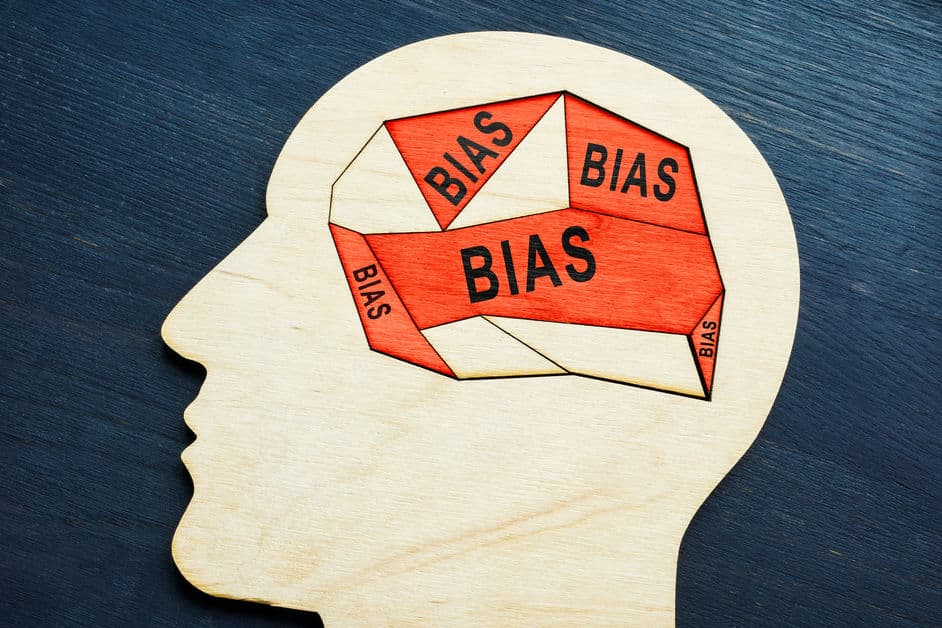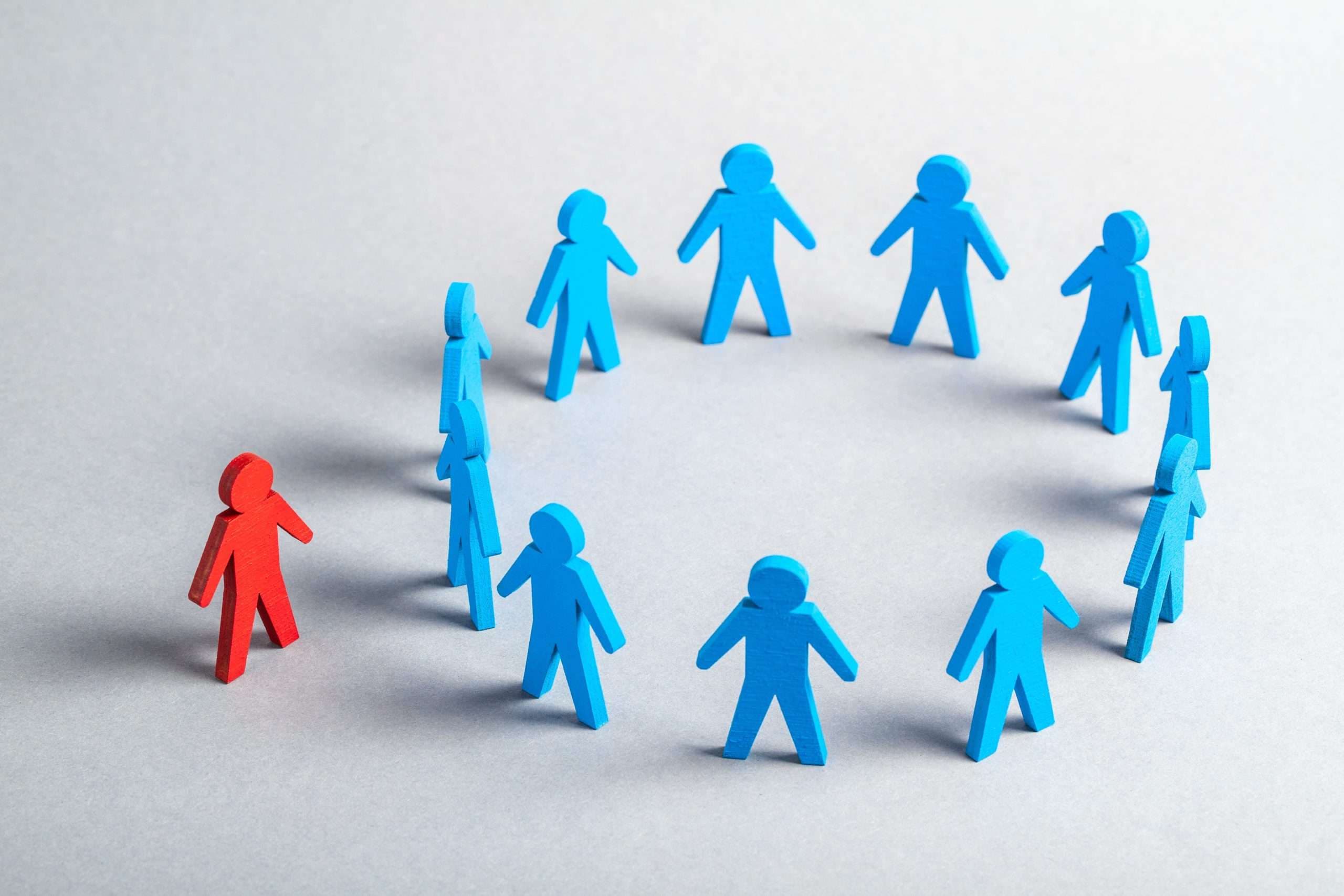
Implicit and explicit bias are two types of bias that are closely related. Understanding these two biases is critical since they can lead to discrimination against minorities in the workplace, schools, and other settings. While they may appear to be distinct issues, they are, in fact, deeply intertwined.
Implicit and explicit bias are two different ways our minds construe the world. Implicit bias is unintentional, universal, and difficult to control. Explicit bias, on the other hand, is conscious. Understanding both types of bias is essential for striving for equality in all aspects of life. In this article, we'll explore how these two biases are different.
What’s In The Article?
Explaining Explicit Bias
How To Measure Explicit Bias
Explaining Implicit Bias
How To Measure Implicit Bias
The Difference Between Implicit And Explicit Bias
Final Thoughts
Explaining Explicit Bias
An explicit bias is a conscious and intentional attitude or behavior. It is the most common type of bias and can be changed through training. Explicit bias can manifest in various ways, including discriminatory policies and practices.
Explicit bias refers to beliefs or attitudes about specific groups based on race, gender, and other characteristics. It is the practice of making decisions about others based on stereotypes, prejudices, and assumptions. Explicit bias is dependent on the context. It is conscious and can evolve over time. Personal experience, knowledge, and beliefs all contribute to explicit bias.
Changing one's attitude toward another group of people or oneself can also change explicit biases. For instance, by correcting false information about stereotypes associated with specific groups of people, one can avoid stereotyping based on incorrect information anymore.
How To Measure Explicit Bias
A questionnaire is one method for measuring explicit bias. Participants in a survey are asked to rate their feelings toward various groups, such as blacks and whites or men and women. They may also be asked how they feel about other issues concerning those groups. Another approach is to ask people what they would think if they had to work with someone of a different race or gender. The responses are then compared to actual behavior.
Explaining Implicit Bias
In contrast to explicit bias, implicit bias is unintentional and unconscious. In controlled experiments, implicit measures of racial preference have been shown to predict discriminatory behavior. It is a preference for one race over another that you may or may not be aware of, but it can influence your behavior and decisions without your knowledge. Implicit bias is our unconscious bias toward people who are different from us regarding race, gender, and ethnicity. We may not even be aware of its presence because it operates subconsciously. Even when we don't intend it, implicit biases can lead to discriminatory behavior.
Life experiences, particularly early in life, shape our attitudes and beliefs. Learning something new becomes linked with similar experiences in our memory and shapes how we think about things later on, even if those thoughts are inaccurate or unfair. This process occurs without our awareness, so many people are unaware of their biases until someone points them out or shows them evidence that contradicts them.
How To Measure Implicit Bias
The implicit association test (IAT) is a psychological test that assesses a person's ability to associate two concepts automatically. The IAT was created in 1998 by Anthony Greenwald and colleagues as part of their research on cognitive processes. This test aimed to see if people could control their automatic associations when presented with stimuli that could trigger these biases.
The Difference Between Implicit And Explicit Bias
While both types of bias are based on the belief that some people are better than others, their motivations differ. Explicit bias is intentional and conscious. You are aware that you are doing it. On the other hand, implicit bias is unintentional and unconscious. It is something you are unaware of as part of your behavior.
Implicit biases predict behavior better than explicit biases. This means a person can have a positive attitude toward people of color while still engaging in discriminatory behavior. According to research, implicit racial biases are more strongly linked to behavior than explicit ones. This suggests that, even if you don't consider yourself racist, your unconscious thoughts may be influencing how you interact with others on a daily basis.
Furthermore, environmental factors such as media portrayals and interactions with others can shape our implicit biases over time, even if we are unaware of them.
Implicit Bias in Healthcare: Why States now Mandate Training
The reason implicit bias gets its own line in so many state licensing rules is that it shows up in clinical decisions. Studies have linked unconscious associations to differences in pain management, cardiac referrals, maternal care, and how seriously a patient's symptoms are taken, even when the clinician holds no explicit bias at all. That is the definition of a health disparity: the same presentation, a different outcome, with nothing in the chart to explain it. We cover the evidence in how implicit bias contributes to health disparities and implicit bias in healthcare and its effects on patient outcomes.
Because the bias is implicit, boards do not treat it as a character problem. They treat it as a skill gap, and they close it the same way they close every other one: with continuing education. A growing list of states now require implicit bias or related training as a condition of license renewal.
Michigan requires one hour of Michigan implicit bias training every year for nearly every licensed health profession (R 338.7004), with two hours for a new license. It applies to Michigan registered nurses, Michigan medical doctors, Michigan LPNs, Michigan APRNs, Michigan dentists, Michigan dental hygienists, and Michigan pharmacists, among others. Some professions require 3 hours for their renewal Michigan Implicit Bias Training - 3 Credits. While other only require 2 hours for the renewal Paths Forward for Diversity, Equity, and Inclusion in Healthcare - 2 CE
Maryland requires every health occupations licensee to complete an approved implicit bias training program at the first renewal on or after April 1, 2022 (HB 28, 2021). See the renewal rules for Maryland medical doctors, Maryland APRNs, Maryland dentists, Maryland dental hygienists, and Maryland pharmacists.
Illinois requires one hour of implicit bias awareness training each renewal for professions regulated by IDFPR (Public Act 102-0004, effective 2022). The hour counts within existing CE totals for Illinois registered nurses, Illinois LPNs, Illinois medical doctors, Illinois physician assistants, Illinois dental hygienists, and Illinois pharmacists.
Massachusetts requires physicians to complete two credits of implicit bias in medicine each renewal cycle under Board of Registration in Medicine rules. Massachusetts medical doctor & Massachusetts osteopathic physician
California takes a different route: since 2022, CME and nursing CE courses that address patient care must include implicit bias content (AB 241), so the training is built into the courses California medical doctors, California physician assistants, and California APRNs already take.
Washington requires two hours of health equity continuing education every four years for most licensed health professions (WAC 246-12-830, effective 2024), and implicit bias is one of the required topics. See Washington medical doctors, Washington osteopathic physicians and Washington physician assistants.
The list grows every session. Virginia has passed bias reduction training for physicians, PAs, and nurses with rules still being written, and several other boards have proposals pending. If your state is not listed, check your current requirements with our CE requirements lookup.
Addressing Implicit And Explicit Bias
Self-awareness is the most effective way to address both implicit and explicit bias. This is the first step toward overcoming bias, which can be attained through introspection. The more you understand yourself, the better you will be able to understand your biases and how they may affect others. For example, suppose a person naturally tends to be suspicious of people different from them. In that case, they should consider why this is so before making assumptions about someone else's intentions or character based solely on their appearance.
Final Thoughts
While implicit and explicit bias can harm people, they have different causes and consequences. A better understanding of these two types of bias will help us develop effective solutions to address them individually and as a society.
The relationship between implicit and explicit bias is complicated, but it is critical to understand how they interact. Implicit bias is difficult to detect because its impacts are not always obvious. However, once you know what to look for, you can begin taking steps to eliminate this bias from your life, which starts with being aware that it exists in the first place.
Frequently asked questions
What is the difference between implicit and explicit bias?
Explicit bias is a conscious attitude or belief a person is aware of and can state. Implicit bias is an unconscious association that shapes judgment without the person knowing it. The two can point in opposite directions: someone can hold egalitarian explicit views and still show measurable implicit bias.
Explicit bias differs from implicit bias in that it is what?
Conscious and deliberate. Explicit bias is held knowingly and can be reported directly, for example in a survey. Implicit bias operates automatically and is measured indirectly, with tools like the Implicit Association Test.
What is the main distinction between implicit and explicit bias?
Awareness. If the person knows they hold the attitude, it is explicit. If the attitude influences behavior without their awareness, it is implicit. Intent is the second distinction: explicit bias is intentional, implicit bias is not.
How is implicit bias measured?
Most often with the Implicit Association Test (IAT), which times how quickly a person pairs concepts such as a social group with positive or negative words. Faster pairings suggest a stronger automatic association. Explicit bias is measured with direct self-report questionnaires.
How does implicit bias impact health disparities?
Implicit bias has been linked to differences in pain management, cardiac referrals, maternal care, and how seriously patient symptoms are taken, even when the clinician holds no explicit bias. When the same presentation produces a different outcome by race, sex, weight, or disability, that gap is a health disparity. This is the reason state licensing boards now require implicit bias training.
What are some examples of implicit bias in everyday life?
Assuming a man in scrubs is the physician and a woman in scrubs is the nurse. Rating identical resumes differently based on the name at the top. Standing farther from a patient with a visible disability. Underestimating a heavier patient's pain. None of these require a conscious belief; they happen automatically.
What is implicit ableism?
An unconscious preference for non-disabled people, or an automatic assumption that disability means lower competence or quality of life. In healthcare it shows up as under-treating pain, skipping preventive screening, or speaking to a companion instead of the patient.
Can implicit bias be reduced?
Yes, but not permanently with a single session. Research supports a mix of awareness (knowing your own IAT results), structured decision tools that limit discretion, individuating (focusing on the person in front of you rather than the group), and exposure to counter-stereotypical examples. Repeated training is why most states that mandate it require it every renewal cycle.
Which states require implicit bias training for healthcare professionals?
Michigan requires one hour every year for nearly all licensed health professions. Maryland, Illinois, Massachusetts, and Washington have their own requirements, and California requires implicit bias content inside CE courses. The list above covers each state and links to the renewal rules by profession.
Is there an implicit bias CE course that counts toward my license?
Yes. Michigan Implicit Bias Training for Healthcare Professionals is a 2-credit course that meets Michigan's annual requirement and counts as general CE in states that accept its accreditation. Completion is reported within 24 business hours where your board uses a CE tracking system. CE compliance experts are available on live chat, email, and phone, 7 days a week.
Luke Porter
Founder